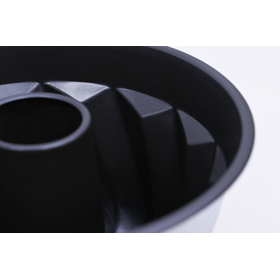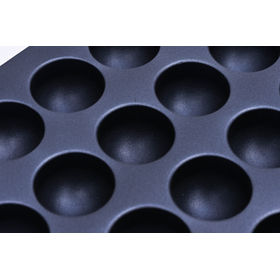
Uniform application on complex shapes and inner surfaces! Sol-gel method ceramic coating.
Suppresses thermal impact on the substrate with low-temperature baking. Coating on complex three-dimensional shapes and uneven surfaces. Achieves both pencil hardness of 9H and release properties.
Conventional ceramic coatings (such as thermal spraying and CVD/PVD) typically involve large-scale processes that require high-temperature plasma or vacuum equipment, which limits the shapes and substrates that can be coated. ■ Formation of Ceramic Coating Films by Sol-Gel Method Our "Biceram" utilizes the "Sol-Gel method," which is a liquid-phase process that involves applying a liquid (starting material) and then curing it. - A strong coating is formed at a lower temperature (200–250°C) than the usual ceramic sintering temperature, minimizing thermal impact on the substrate. - Due to the liquid process, it can coat complex three-dimensional shapes, fine irregularities, and the inner surfaces of pipes. - The coating itself has a hybrid structure that incorporates silicone release agents within a three-dimensional network of silica (SiO2). In addition to the "uniform applicability" unique to the Sol-Gel method, it simultaneously achieves scratch resistance that surpasses conventional fluororesins with a pencil hardness of 9H and excellent initial release properties.
- Company:日建塗装工業
- Price:Other